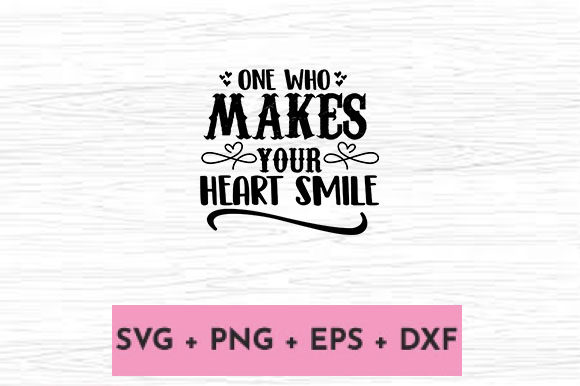
Reviewing ONE WHO MAKES YOUR HEART SMILE for Embroidery
As a designer who has spent countless hours digitizing and stitching out various motifs, I approach every new machine embroidery design with a mix of curiosity and caution. The market is flooded with generic quotes, but occasionally, a file stands out because of its potential for genuine emotional connection. ONE WHO MAKES YOUR HEART SMILE is one such design. It falls under the broad category of Crafts and specifically within digital Graphics, but its true value lies in how it translates from a screen to a tangible, stitched reality.
When I first loaded this file into my software, I was not just looking at lines and nodes; I was visualizing the end product. This is not merely a collection of vectors; it is a sentiment that demands careful execution. For those of us running small shops or creating personalized items, the difference between a design that looks amateurish and one that looks professional often comes down to understanding the source material. Let’s break down how this specific quote performs in real-world applications.
First Impressions and Visual Personality
The phrase itself carries a warm, affectionate mood. It is versatile enough for Valentine’s Day, yet subtle enough for everyday wear. Visually, the layout suggests a balance between readability and decorative flair. In embroidery, legibility is paramount. If the letters are too thin or the spacing too tight, the thread will merge, creating a blob rather than a message. My initial assessment of ONE WHO MAKES YOUR HEART SMILE indicates a structure that likely relies on clean lines, which is promising for clarity.
However, as an experienced reviewer, I look beyond the aesthetic. I consider the stitch density. A design that looks beautiful on a computer screen can become a nightmare if it is too dense for lightweight fabrics or too sparse for heavy towels. The visual personality here feels approachable, suggesting it would work well with standard thread colors like soft pinks, deep reds, or classic blacks, depending on the fabric base.
Real-World Application: The Custom Tote Bag Test
To truly evaluate a design, you must imagine it on a specific product. I recently considered using this quote for a custom tote bag design intended as a gift for a new mother. The idea was to create a durable, stylish bag that celebrated the joy of parenthood. Canvas tote bags provide a stable surface, making them ideal for testing new embroidery files.
In this scenario, ONE WHO MAKES YOUR HEART SMILE shone brightly. The text-based nature of the design allowed for a centered placement that drew the eye immediately. Because canvas has a distinct fabric texture, the stitches needed to sit on top of the weave without sinking in. This is where proper stabilization becomes critical. Using a cut-away stabilizer ensured that the hoop tension did not distort the lettering, preserving the integrity of the message. The result was a handmade product that felt high-end and thoughtful, far surpassing a simple printed graphic.
Versatility Across Product Lines
Beyond tote bags, this design shows promise for various other items. For sweatshirt embroidery, the softness of the fleece requires a different approach. Here, a lighter touch is needed to prevent the garment from becoming stiff. If the design includes any fill stitch areas, they must be balanced with running stitch outlines to maintain flexibility. For baby embroidery on onesies, the scale must be reduced significantly. Small details can get lost or become scratchy if the stitch count is too high for delicate skin. Always test on scrap fabric before committing to the final garment.
For Etsy sellers and craft business owners, versatility is key to profitability. This design could easily be adapted for holiday embroidery projects, such as Valentine’s themed pillows or kitchen towels. The emotional resonance of the quote makes it a strong candidate for personalized gift markets. Customers are not just buying a stitched item; they are buying a feeling. When the stitching is clean and the design is well-executed, it builds customer trust and enhances brand consistency.
Technical Considerations and Potential Pitfalls
While the design has strong potential, there are areas where caution is necessary. Text-based designs are notoriously tricky on curved surfaces. If you plan to use ONE WHO MAKES YOUR HEART SMILE on a cap or hat, be aware that distortion is likely. The curvature of the front panel can stretch the letters, making them appear uneven. In such cases, using a applique design technique might be safer, where the text is cut from fabric and stitched down, reducing bulk and improving readability.
Another concern is dark fabric. Embroidering light-colored thread on dark material requires careful planning. Without proper underlay stitches, the background fabric may show through the letters, ruining the contrast. Always check your design in a black-and-white mockup to see how the shapes hold up without color distraction. Additionally, verify the hoop size requirements. If the design is large, it may not fit in standard 4x4 hoops, requiring a larger frame and more precise hooping techniques.
Commercial Use and Licensing
For those looking to sell finished items, understanding the license is crucial. The product description mentions high-quality vector SVG files and PNGs, which are typically used for printing or cutting. However, for machine embroidery, you need specific digitized files. Ensure that the package you purchase includes the correct digital embroidery file formats compatible with your machine, such as PES, DST, or JEF. Never assume compatibility. Furthermore, confirm whether the license allows for commercial use of the finished embroidered patch or apparel. Many designers offer personal-use licenses by default, so upgrading to a commercial license may be necessary for small shop product sales.
Final Verdict for Designers and Makers
ONE WHO MAKES YOUR HEART SMILE is a solid addition to any designer’s library, provided it is used with technical awareness. It offers a blend of emotional appeal and visual simplicity that works well for a variety of custom apparel and home decor items. Its strength lies in its adaptability, but its success depends on the maker’s attention to detail.
Before starting your next project, take the time to review the stitch path, adjust the density if possible, and choose the right stabilizer. Whether you are creating a printable mockup for your online store or stitching a real-life gift, this design can elevate your design assets when handled with care. It is a reminder that in the world of embroidery, the best designs are those that connect with the viewer while respecting the limitations of the needle and thread.
For hobbyists and professionals alike, integrating this quote into your repertoire can enhance your portfolio. It serves as a practical example of how typography and emotion intersect in commercial embroidery. Just remember to test, adjust, and stitch with intention. The final product should not only look good but feel good to the touch, ensuring that the recipient truly smiles when they receive it.