Reviewing Teaching Creates All Other Professions for Embroidery
As a designer who has spent years digitizing and stitching thousands of patterns, I approach every new file with a critical eye. We are not just looking at pretty pictures; we are evaluating structural integrity, stitch flow, and commercial viability. Recently, I evaluated the Teaching Creates All Other Professions design, a text-based graphic available in SVG, DXF, and EPS formats. While this is technically categorized under Crafts and Graphics, its application in the embroidery world requires a nuanced understanding of how vector lines translate into thread.
First Impressions and Visual Personality
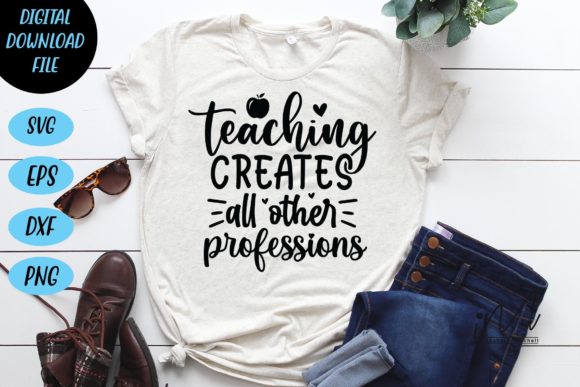
The phrase itself carries weight. It is bold, respectful, and universally understood within the education community. Visually, the design relies heavily on typography. When I first opened the SVG file, my immediate concern was legibility. Text-heavy designs can be tricky because what looks crisp on a screen can become a muddy mess under a needle if the spacing is too tight or the font strokes are too thin.
The mood here is professional yet warm. It does not scream for attention with chaotic elements; instead, it offers a clean, dignified statement. This makes it an ideal candidate for projects where clarity is paramount. For an embroidery project, this means the design needs to maintain its readability even when scaled down. The lack of complex imagery allows the message to stand alone, which is a strength for minimalist aesthetics but a challenge for technical execution.
Real-World Application: The Custom Tote Bag Test
To truly understand how Teaching Creates All Other Professions performs, I mentally walked through a common real-life scenario: creating a custom embroidered tote bag for a retiring teacher. This is a high-demand item for Etsy sellers and small shop owners. The goal is a product that feels premium, durable, and personal.
Using the provided SVG file, I resized the design to fit a standard 5x7 hoop. Because the file formats allow you to change the color and size with the appropriate software, I adjusted the dimensions to ensure the lettering remained thick enough for a satin stitch or a dense fill stitch. On a canvas tote, which has a relatively coarse fabric texture, fine details can get lost. By ensuring the text was substantial, the finished product maintained high visual appeal. The contrast between the thread colors and the natural canvas created a striking look that would likely drive buyer engagement on a craft fair table or an online listing.
Versatility Across Product Lines
Beyond tote bags, this design shows promise in several other areas. For custom apparel, such as a sweatshirt embroidery project, the design works well on the chest or sleeve. However, one must be cautious with stretchy fabrics. If the stitch density is too high without proper stabilization, the garment may pucker. For baby embroidery, such as a onesie or blanket, the scale must be reduced significantly. Here, the simplicity of the text is an advantage, as there are no intricate shapes to distort on small, delicate items.
For those running a craft business, this asset is versatile. It can be used for holiday embroidery gifts, such as personalized mugs (via sublimation using the same SVG) or aprons for school staff. The professional tone fits boutique branding well, allowing handmade product sellers to create cohesive collections that appeal to educators and parents alike.
Technical Considerations and Stitching Challenges
While the design is strong conceptually, its execution depends entirely on how you convert these vector graphics into a machine embroidery design. Since the product description lists SVG, DXF, and EPS, it is crucial to note that these are cut files, not native embroidery files like PES or DST. You will need digitizing software to convert them.
When digitizing Teaching Creates All Other Professions, pay close attention to the following:
- Stitch Density: Text requires careful balancing. Too dense, and the fabric pulls; too sparse, and the background shows through, ruining the readability.
- Font Weight: Ensure the letters are thick enough to support a satin stitch. Thin lines may require a running stitch, which can look less premium on certain fabrics.
- Spacing: Kerning is vital. Letters that touch or are too close can merge during stitching, especially on textured fabrics like towels or fleece.
- Stabilizer Choice: For dark fabric or stretchy materials, use a cut-away stabilizer to prevent distortion. For woven fabrics like cotton tea towels, a tear-away may suffice.
I also recommend testing the design on scrap fabric first. Check how the thread colors interact with the material. A black thread on a navy shirt might lack contrast, while white thread on a light gray heathered sweatshirt might disappear. Always test in black and white mockups to verify shape clarity before committing to colorful threads.
Commercial Viability and Brand Consistency
For digital product sellers and creative entrepreneurs, the value of this design lies in its emotional resonance. Teachers are a loyal customer base. A well-executed Teaching Creates All Other Professions item builds customer trust and enhances brand consistency. It signals that your shop understands the profession’s value.
However, professionalism is key. A sloppy stitch-out can damage your reputation. Ensure that your finished product looks clean, with no loose threads or puckering. This attention to detail increases the perceived value of the handmade product and encourages repeat buyers. Whether you are selling physical items or using the design for printable mockups to showcase other products, the quality of the graphic matters.
Final Designer Notes
Before you launch this into your production line, consider these practical steps:
- Verify Licensing: The product description does not explicitly state commercial license terms for the embroidery output. Confirm whether you can sell finished items made with this design. This is critical for Etsy sellers and small business owners to avoid legal issues.
- Check Hoop Size Compatibility: Ensure the scaled design fits your machine’s hoop size. Large text may require a 6x10 or larger hoop, which not all home machines support.
- Inspect Small Details: Zoom in on the vector file. Are there any stray nodes or overlapping paths that could cause digitizing errors? Clean up the file before conversion.
- Test on Curved Surfaces: If applying this to caps or curved pillow covers, be aware that text can distort. Use a smaller font size or adjust the placement to avoid the seam area.
In conclusion, Teaching Creates All Other Professions is a powerful asset for the right project. It is not just a graphic; it is a statement piece. With careful digitizing, appropriate fabric selection, and precise stitching, it can elevate your embroidery portfolio. It fits seamlessly into the worlds of Crafts and Graphics, offering a bridge between digital design and tangible, heartfelt creations. Treat it with the technical respect it deserves, and it will serve your craft business well.