Reviewing We Love Because He First Loved Us for Embroidery
As a designer who spends half my life staring at digitized files and the other half watching needles punch through fabric, I have learned that not every beautiful graphic translates into a quality embroidery project. When I first pulled up We Love Because He First Loved Us, my initial reaction was one of cautious optimism. The phrase carries significant weight, both emotionally and visually. It is a loving Valentine’s Day Quote design that relies heavily on typography and sentiment rather than complex imagery. For those of us in the Crafts industry, specifically those dealing with Graphics intended for physical production, this distinction matters immensely.
The Visual Personality and Mood
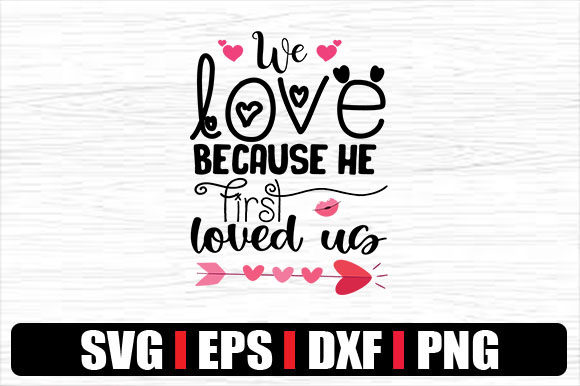
The first thing you notice about We Love Because He First Loved Us is its gentle, inviting mood. It does not shout; it whispers. This makes it an excellent candidate for items meant to convey comfort, faith, or deep affection. The layout appears balanced, with a flow that suggests movement without sacrificing readability. In the world of machine embroidery design, flow is critical. If the letters are too disjointed, the stitching can look choppy. If they are too connected, you risk thread breaks and puckering.
From a reviewer’s standpoint, the visual personality here is versatile. It feels at home on a rustic linen tote just as much as it does on a modern, minimalist sweatshirt. This versatility is rare. Many designs are pigeonholed into specific aesthetics, but this piece bridges the gap between traditional home decor and contemporary custom apparel.
Real-World Application: The Tote Bag Test
To truly evaluate an embroidery file, you have to imagine it in a real-life scenario. I recently considered this design for a custom order involving canvas tote bags for a local boutique. The client wanted something that felt personal but not overly religious in a dogmatic sense—more about universal love and care. We Love Because He First Loved Us fit this brief perfectly.
When planning the tote bag design, I had to consider the fabric texture. Canvas is sturdy, which is good for supporting the weight of the stitches, but it can be unforgiving if the stitch density is too high. A dense fill stitch on thin canvas will cause the fabric to pucker and distort. Assuming this design utilizes a mix of satin stitch for outlines and lighter fill stitch or running stitch for larger areas, it should hold up well. However, without seeing the specific digitization, I always advise testing on scrap fabric first. You need to see how the threads interact with the weave of the material.
Performance Across Different Products
Beyond tote bags, where else does this design shine? Let’s break down its potential across various handmade product categories:
- Sweatshirt Embroidery: This is perhaps the strongest use case. The softness of fleece or cotton blend fabrics complements the tender message. Ensure you use a cut-away stabilizer to prevent the heavy garment from pulling away from the hoop during stitching.
- Baby Embroidery: For onesies or burp cloths, the scale must be reduced. Tiny lettering can become illegible if the stitches merge. Check the smallest details closely. If the text becomes a blob at smaller sizes, it may not be suitable for infant wear unless enlarged significantly.
- Holiday Embroidery: While clearly tied to Valentine’s Day, the message is timeless. It works for Easter gifts, wedding presents, or anniversary personalized gift items. Its neutrality allows it to transcend a single holiday.
- Embroidered Patch: Creating a patch requires high-density stitching and a merrowed edge. If the design has isolated elements, ensure they are connected properly for patch production, or plan to applique the background.
Technical Considerations for Designers
For the Etsy seller or craft business owner, technical reliability is just as important as aesthetic appeal. Here are the practical notes I keep in mind when evaluating a new asset like We Love Because He First Loved Us:
- Check Thread Color Contrast: Since this is a text-based design, contrast is king. On dark fabrics, light threads are essential. On light fabrics, deep reds, navies, or blacks work best. Test your design in black and white mockups to ensure the shape remains clear without color reliance.
- Inspect Small Details: Zoom in on the curves of the letters. Are there excessive jump stitches? Do the corners look sharp or rounded? Sharp corners in satin stitch can lead to thread breaks. A well-digitized file will have underlay stitches that support these turns.
- Confirm Hoop Size: Before committing to a large run of commercial embroidery, verify the maximum dimensions. Does it fit in a 4x4 hoop, or do you need a 5x7? This affects your production speed and machine choice.
- Licensing and Usage: The product description mentions high-quality vector SVG files and PNGs with transparent backgrounds. This suggests the asset is primarily digital graphics. If you are using this for embroidery, you must ensure you have the rights to convert these graphics into stitched formats or that the provider offers a dedicated digital embroidery file format (like PES, DST, or EXP). Never assume a SVG is ready for machine stitching without proper digitization or licensing confirmation.
Avoiding Common Pitfalls
There are scenarios where We Love Because He First Loved Us might struggle. Curved surfaces, such as caps or hats, require careful placement. If the text is too long, it may wrap awkwardly around the crown, distorting the message. In these cases, consider breaking the phrase into two lines or using a smaller font size. Additionally, avoid using this on highly textured fabrics like thick terry cloth towels unless you use a water-soluble topping. The stitches can sink into the pile, making the text hard to read.
For small shop product lines, consistency is key. If you are creating a series of design assets for a brand, ensure this design’s font style matches your other offerings. A mismatched aesthetic can confuse buyers and dilute brand recognition.
Final Verdict on Value and Appeal
Ultimately, We Love Because He First Loved Us offers strong potential for finished product value. It taps into an emotional resonance that drives sales in the personalized gift market. Customers are not just buying a stitched shirt; they are buying a feeling of being loved and valued. When executed with proper thread colors and stable stitching, this design elevates a simple item into a cherished keepsake.
For the creative entrepreneurs and makers out there, this design is a solid addition to your library. It is not just a graphic; it is a storytelling tool. Just remember to respect the technical limits of your machine and fabric. Test, adjust, and stitch with intention. When you do, the result is not just a product, but a piece of art that speaks directly to the heart.