Stitching Joy: A Designer’s Take on You re One in a Melon
As an embroidery designer who has spent countless hours digitizing, testing, and refining designs for real-world application, I approach every new machine embroidery design with a critical eye. It is not just about whether a file looks cute on a screen; it is about how it behaves under the needle, how it reads from three feet away, and whether it adds genuine value to a finished product. Recently, I evaluated You re One in a Melon, a playful Valentine’s Day quote design, to determine its viability for commercial and personal projects. This review breaks down the practical realities of using this asset in a professional craft environment.
First Impressions and Visual Personality
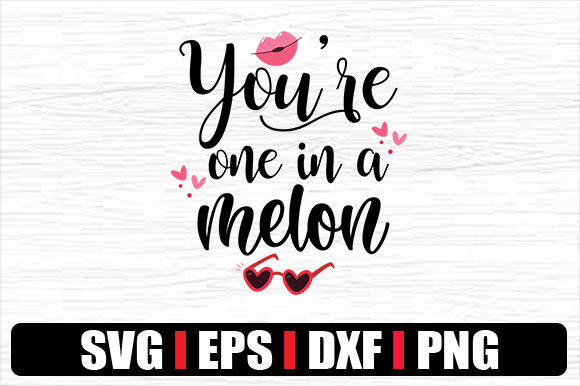
The immediate appeal of You re One in a Melon lies in its whimsical tone. In a market saturated with traditional hearts and roses, this design offers a refreshing twist on holiday affection. The visual personality is lighthearted and approachable, making it ideal for customers who prefer humor over heavy romance. From a layout perspective, the balance between the text and the melon graphic appears well-considered for readability. For embroidery, this is crucial. If the elements are too cramped, the stitches will merge, losing definition. If they are too spread out, the design lacks cohesion.
When reviewing the provided assets, which include high-quality vector SVG files and PNGs with transparent backgrounds, I noted their versatility. While these formats are excellent for sublimation or print-on-demand services like mugs and cards, my focus here is strictly on thread-based execution. The clean lines in the vector preview suggest that the underlying stitch file should maintain clarity, provided the digitizer has respected the limitations of thread tension and fabric pull.
Real-World Application: The Tote Bag Test
To truly understand the potential of this design, I imagined a specific use case: a custom embroidered tote bag for a local boutique. Tote bags are a staple for Etsy sellers and small shop owners because they offer a large, flat canvas. However, canvas fabric can be tricky. It has a distinct weave that can interfere with small details.
In this scenario, You re One in a Melon would serve as a charming accent on a neutral-colored cotton canvas bag. The key here is scale. If the design is scaled down too much, the lettering in "Melon" might become illegible due to stitch density. Conversely, if scaled appropriately for a 5x7 or larger hoop, the design shines. The contrast between the green rind and the pink flesh of the melon provides an opportunity to play with thread colors. Using a variegated thread for the fruit interior could add depth, while a solid satin stitch for the text ensures maximum readability. This kind of thoughtful execution transforms a simple handmade product into a premium item that commands a higher price point.
Apparel and Wearables
Beyond accessories, this design translates well to custom apparel. Imagine it stitched on the left chest of a heather grey sweatshirt. The casual nature of the quote pairs perfectly with comfortable, everyday wear. For sweatshirt embroidery, the texture of the fleece requires careful attention to stabilizer choice. A cut-away stabilizer is often necessary to prevent the design from sinking into the nap of the fabric. The design’s open areas allow the fabric texture to show through slightly, which can be aesthetically pleasing if managed correctly. However, dense stitch areas must be kept minimal to avoid stiffness, which can be uncomfortable against the skin.
For baby embroidery, such as on a onesie or bib, the design needs to be resized significantly. Here, the simplicity of the shape works in its favor. Complex gradients or tiny fill stitches should be avoided in favor of bold running stitches or simple satin columns. Parents appreciate durable, soft finishes, so ensuring the back of the embroidery is clean and free of excessive jump stitches is vital for customer satisfaction.
Navigating Technical Challenges
While You re One in a Melon is visually appealing, there are technical constraints to consider. Embroidery is not printing; thread has physical volume and tension. When working with stretchy fabric like jersey knits for t-shirts, the design must be digitized with compensation for stretch. If the original file was not optimized for knits, the letters may distort after washing. Always test on scrap fabric identical to your final material.
Another consideration is hoop size. If you are working with a small 4x4 hoop, you may need to split the design or choose a simplified version. Attempting to cram a wide phrase into a small circular space can lead to registration issues, where the text and graphic do not align perfectly. For curved surfaces like caps, the design’s width becomes a limiting factor. A wide design may not wrap comfortably around the front panel of a baseball cap without distortion. In such cases, stacking the text above and below the melon graphic might be a better layout strategy than a horizontal arrangement.
Dark fabrics present another challenge. If stitching this design on navy or black fabric, you must ensure that the underlying layers do not peek through. Using a matching underlay stitch and potentially a light-colored top sheet can help maintain vibrancy. The transparency of the provided PNG files is useful for mockups, but it does not solve the physical issue of thread coverage on dark textiles.
Commercial Viability and Brand Consistency
For craft business owners, consistency is key. Does You re One in a Melon fit your brand aesthetic? If your shop specializes in rustic, vintage styles, this modern, pun-based design might feel out of place. However, for brands focused on fun, contemporary, or family-friendly items, it is a strong addition. It enhances buyer engagement because it invites a smile. Products that evoke emotion tend to perform better on social media and in gift guides.
When creating printable mockups or digital previews for your online store, use the high-resolution PNGs to showcase the design on various products. This helps customers visualize the final result. However, always clarify that the actual stitched product may have slight variations due to thread sheen and fabric texture. Transparency builds trust.
Practical Designer Notes
- Test First: Always stitch a sample on scrap fabric before committing to a final garment. Check for puckering or thread breaks.
- Check Density: Review the stitch count if available. High density can cause fabric distortion, especially on lightweight materials.
- Stabilizer Selection: Match your stabilizer to your fabric. Use tear-away for stable woven fabrics and cut-away for stretchy knits.
- Thread Contrast: Ensure your thread colors contrast sufficiently with the fabric. Low contrast can make the design disappear from a distance.
- Licensing Verification: Before selling finished items or digital products, confirm the license terms associated with the digital embroidery file. Ensure you have the right to use it for commercial purposes.
- Mockup Testing: View the design in black and white to check for value contrast. If it looks muddy in grayscale, it may lack definition when stitched.
Final Verdict
You re One in a Melon is a versatile and charming addition to any designer’s library of design assets. Its strength lies in its emotional resonance and adaptability across various Crafts categories. Whether used for a personalized gift, a boutique tote bag design, or a playful holiday embroidery project, it offers significant potential. Success depends on respecting the technical limitations of embroidery machinery and materials. By paying attention to stitch density, fabric choice, and proper stabilization, you can transform this digital graphic into a high-quality, tangible product that delights customers and strengthens your brand reputation. As with any embroidery project, the difference between good and great lies in the details of execution.