GOUDA LOOKING LOVE: A Designer’s Review
As an embroidery designer who has spent countless hours digitizing and stitching out quotes for clients, I have developed a keen eye for what works on fabric versus what only looks good on a screen. When I first encountered GOUDA LOOKING LOVE, my initial reaction was one of amused appreciation. It is a playful pun that relies heavily on visual charm and typographic balance. For those of us in the craft business, finding designs that bridge the gap between humor and aesthetic appeal is rare. This piece falls squarely into the category of clever Graphics that translate well into tangible Crafts.
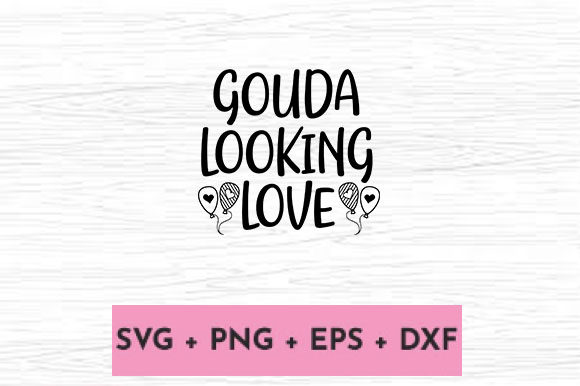
The design features a Valentine-themed quote saying that plays on the word "good" with a cheese reference. While the product description highlights its utility as high-quality vector SVG files for mugs, t-shirts, and cards, my focus here is strictly on its viability as a machine embroidery design. Can this graphic survive the transition from digital asset to stitched reality? Let us break it down from the perspective of someone who has to hoop, stitch, and sell the final result.
First Impressions and Visual Personality
The mood of GOUDA LOOKING LOVE is lighthearted, warm, and slightly whimsical. It does not take itself too seriously, which makes it an excellent candidate for personalized gifts and boutique branding. The layout appears to prioritize readability, which is crucial when dealing with text-based embroidery. In my experience, overly complex scripts or tiny serif fonts often turn into illegible blobs once thread hits fabric. This design seems to favor bold, clear lines that suggest it would handle satin stitch or dense fill stitch applications well.
For an Etsy seller or small shop owner, the visual personality of this design offers versatility. It fits naturally into spring collections, Valentine’s Day promotions, or even year-round kitchen decor due to the foodie pun. It creates an immediate connection with the viewer, inviting a smile. That emotional response is half the battle in selling handmade products.
Real-World Application: The Tote Bag Test
To evaluate this properly, I imagined a real-life scenario: preparing a custom embroidered tote bag for a local farmer’s market vendor. The client wanted something cheerful that would stand out against natural cotton canvas. GOUDA LOOKING LOVE seemed like a perfect fit. Canvas provides a stable base, allowing for higher stitch density without worrying about fabric puckering.
In this context, the design would likely serve as the central focal point. I would recommend using a contrasting thread colors palette—perhaps a creamy yellow for the cheese element and a deep red for the love aspect—to ensure the pun is visually distinct. The transparent PNG files mentioned in the description are useful for creating printable mockup previews for customers, but the actual stitching requires careful planning. If the design includes intricate details, I would advise checking if an applique design approach might be better than full embroidery to reduce bulk and stitch time.
Performance on Different Fabrics
Not all fabrics behave the same way. When considering custom apparel like sweatshirts or t-shirts, the stretch of the material becomes a critical factor. For a sweatshirt embroidery project, the fleece backing can hide minor imperfections, but it also adds thickness. You must ensure your hoop size is large enough to accommodate the design without distorting the garment. A medium to large hoop is typically safer for quote-based designs to maintain proper spacing between letters.
On the other hand, using this on a cap or hat presents challenges. Curved surfaces require precise placement. If the text is too wide, it may wrap around the curve awkwardly, making it hard to read from the front. For baby embroidery, such as on onesies or burp cloths, simplicity is key. Babies move, and their clothes undergo frequent washing. If GOUDA LOOKING LOVE has very fine details or long floating threads, it might not hold up as well as a simpler, bolder version. Always consider the end-user’s lifestyle.
Where to Use Caution
While this design is versatile, there are scenarios where you should proceed with care. Avoid using it on thin, slippery fabrics like silk or rayon unless you are an experienced digitizer who can adjust the underlay significantly. Textured fabrics, such as terry cloth towels, can swallow small details. If the design includes tiny lettering or delicate corners, they may get lost in the pile of the towel. In such cases, increasing the size of the design or simplifying the stitch path is necessary.
Additionally, be mindful of dark fabrics. If the design relies on subtle shading or light-colored threads, it may not pop against black or navy blue. Always test your thread colors against the fabric background. A quick black-and-white mockup can reveal contrast issues before you waste expensive thread and stabilizer.
Enhancing Product Value and Brand Consistency
From a business standpoint, how does GOUDA LOOKING LOVE affect your brand? Using high-quality, witty designs elevates the perceived value of your finished product. Customers are willing to pay more for items that feel unique and professionally executed. This design supports brand consistency if your shop focuses on fun, modern, or food-inspired themes. It encourages buyer engagement because it is shareable content; people love posting cute, funny items on social media.
However, professionalism comes from execution. A great design poorly stitched will damage your reputation. Ensure that your stabilizer choice matches the fabric weight. For stretchy knits, use a cut-away stabilizer. For woven cottons, a tear-away may suffice. Proper stabilization prevents distortion and ensures the design remains crisp after washing.
Practical Notes for the Embroidery Designer
Before committing to a large production run or listing this as a new item in your small shop product lineup, follow these steps:
- Test on scrap fabric: Never stitch directly on the final garment. Use a similar fabric scrap to check tension and registration.
- Check file compatibility: The description mentions SVG and PNG files, which are great for cutting machines and printing. However, for machine embroidery, you need specific formats like PES, DST, or JEF. Confirm that the seller provides these digital embroidery file formats or that you have the software to convert them accurately.
- Review stitch density: If converting from SVG, ensure the digitized version does not have excessive density, which can cause needle breaks or fabric tearing.
- Verify licensing: Since this is intended for commercial use, such as selling embroidered patches or tote bag designs, confirm the license terms. Some graphics allow personal use only, while others permit commercial sales of physical items but not digital resale.
- Inspect small details: Zoom in on the design. Are there any isolated stitches or tiny jumps that could cause threading issues? Clean up the path if necessary.
In conclusion, GOUDA LOOKING LOVE is a charming addition to any designer’s library of design assets. It offers a blend of humor and visual appeal that resonates with modern consumers. By understanding its strengths and limitations across different fabrics and applications, you can create stunning holiday embroidery pieces, personalized gifts, and profitable commercial embroidery products. Treat it with the technical respect it deserves, and it will serve your craft business well.